Skip to content
← Back to Home

About PRUWIGS

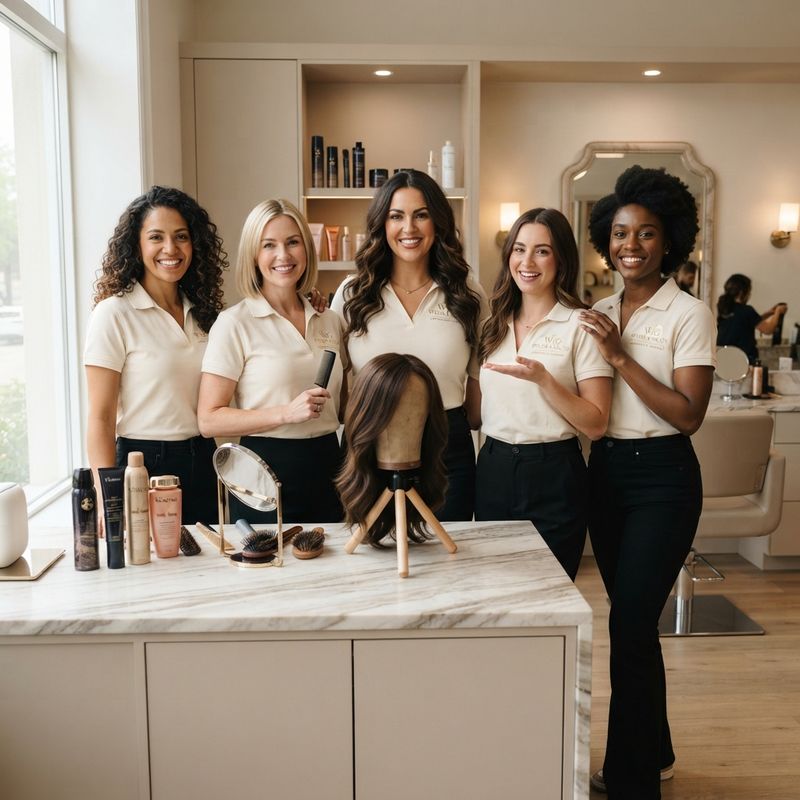
PRUWIGS glueless lace wig and styling tools on a vanity

What the Brand Actually Is, and What It Is Not

The same no-glue claim shows up on 9 competing wig pages this week, which is exactly why this page leads with numbers instead of adjectives. That includes the one-star complaint most brand pages leave out, and the exact reason it happened.

Run a wide-tooth comb through a PRUWIGS unit after a workday and the shed comes out in single strands. Each hair traces to one donor head of Brazilian virgin hair, cut cuticle-down so the layers never saw against each other. Pull on the 250% Max HD lace closure for a 26-inch install, or the 200% 360 full lace unit for a high ponytail. No founder legend sits behind either one, and inventing one would not help you pick the density your own hairline needs.

One buyer bleached the knots with a 40-volume developer for thirty minutes, and the hair took it without turning to straw. Another wrote that her closure shed badly, and that review is still up. The 4.3 average you see on this page carries both of them.

Those 206 ratings came off ordinary orders, not seeded creator units, so open the one-star notes before you pick a density.

Every strand comes off one donor head, cut cuticle-down and left unprocessed. That single-donor cut is why you comb the unit out after a workday instead of pulling shed hair off your shoulders: aligned cuticles do not snag on each other the way blended bundles do. Dye it jet black for your graduation, flat-iron the roots, wash it every other week. It behaves like hair that grew on your head.

Both units ship on the same strap-and-comb cap: an adjustable back strap, four anchor combs and a drawstring at the nape. Set the strap to a measured number and the fit question is settled before the lace ever touches your forehead.
4.3 ★Average rating
206Verified buyer reviews
22.5 inMax cap circumference
30 daysRetailer return window

Why the Units Are Built This Way

PRUWIGS builds these units as a confidence tool, not a medical device, and answers support messages in writing when one arrives wrong.

Hair Bought One Head at a Time

Blended bundles pull hair from several heads, and that mix is what saws strands apart in the wash. Open the bag on delivery day and no chemical smell needs airing out, which is what buying by the head instead of the kilo pays for.

Built for the First Wig, Not the Tenth

Thinned knots and a lace edge already shaped to a hairline take the two hardest steps off a beginner's plate. What is left is a strap, a nape tie, and four anchors you can set in front of a bathroom mirror.

Cosmetic, Not Clinical

Wearers going through chemotherapy or a shaved-head stretch use these units to look like themselves in a work meeting. That is a confidence tool and nothing more; no wig treats hair loss.

Someone Answers the Message

One buyer had a problem with her order and wrote that customer service fixed it immediately. Message the support desk about a wrong-size cap and the reply lands in writing, where the next buyer can read whether it held.

Who the Cap Was Sized For

The night-shift nurse, the 4c wearer chasing a texture match, the length-goal protective styler, and the wearer starting over after chemo.

The Nurse Who Leaves at 5:40 a.m. and Cannot Restyle

Braids go flat under a scrub cap by hour three, so the unit has to sit without a mirror check. Set the strap once in the parking lot and the cap holds through a full shift and the drive home.

A 4c Wearer Tired of Being Clocked

Kinky straight reads as a fresh silk press on fine 4c hair rather than as fibre. Wearers who match texture instead of fighting it report the unit blending at the temples where a bone-straight unit would announce itself.

The One Chasing Length Goals Without a Flat Iron

Your own hair sits braided underneath for weeks while the unit takes every bit of the daily handling. Six months of that is six months without heat landing on your ends.

Six Weeks After the Head Shave

A shaved scalp takes a strap-and-comb cap more easily than a glued one, with nothing to lift and no remover to scrub. One wearer described a unit like this as the thing that let her walk into a room again.

Where this cap is the wrong call

  • Skip this if your head measures past 22.5 inches at the hairline: the strap runs out of notches and the cap will pinch by evening.
  • Skip the 250% kinky straight closure if you want a barely-there everyday feel, because that density traps heat and wearers say so in warm months. The 200% curly unit runs lighter.

One Configuration a Stylist Would Start You On

A wig installation specialist picks the starting unit and names what decides whether a cap holds through a 12-hour day.

Licensed cosmetologist and wig installation specialist

Renee Okafor

Licensed Cosmetologist and Wig Installation Specialist

A wearer sets the strap by feel instead of by tape measure, the braids underneath sit bulky, and the cap creeps back an inch by lunch. Most install failures I see are fit failures, not lace failures. Flatten the braids, set the strap to a measured number, then mist a lace melt spray along the edge and tie a band down for fifteen minutes. On a Max HD lace unit that ships trimmed to shape, that is the whole install. _Expert perspective: composite view reflecting industry practice. Individual experiences vary._

Before the lace touches your forehead

  • Mist the lace melt spray along the edge, tie a band down for fifteen minutes, then take the band off before it leaves a crease at the temple.
  • Pick the 200% build for daily wear through a humid month and save the 250% for the wedding, because the denser build traps heat by afternoon.
  • Run a tape around your hairline before you order: the return window covers a size miss, but only if you catch it in the first weeks.

Where to start

  • The 250% density kinky straight closure unit
  • The 200% density 360 curly unit
Compare both units